
Guides to the parts of the research credit that decide outcomes
Short, practical explanations of qualification, documentation, state programs and examination, each linked to a tool or service that puts it into practice.
Guides
Videos
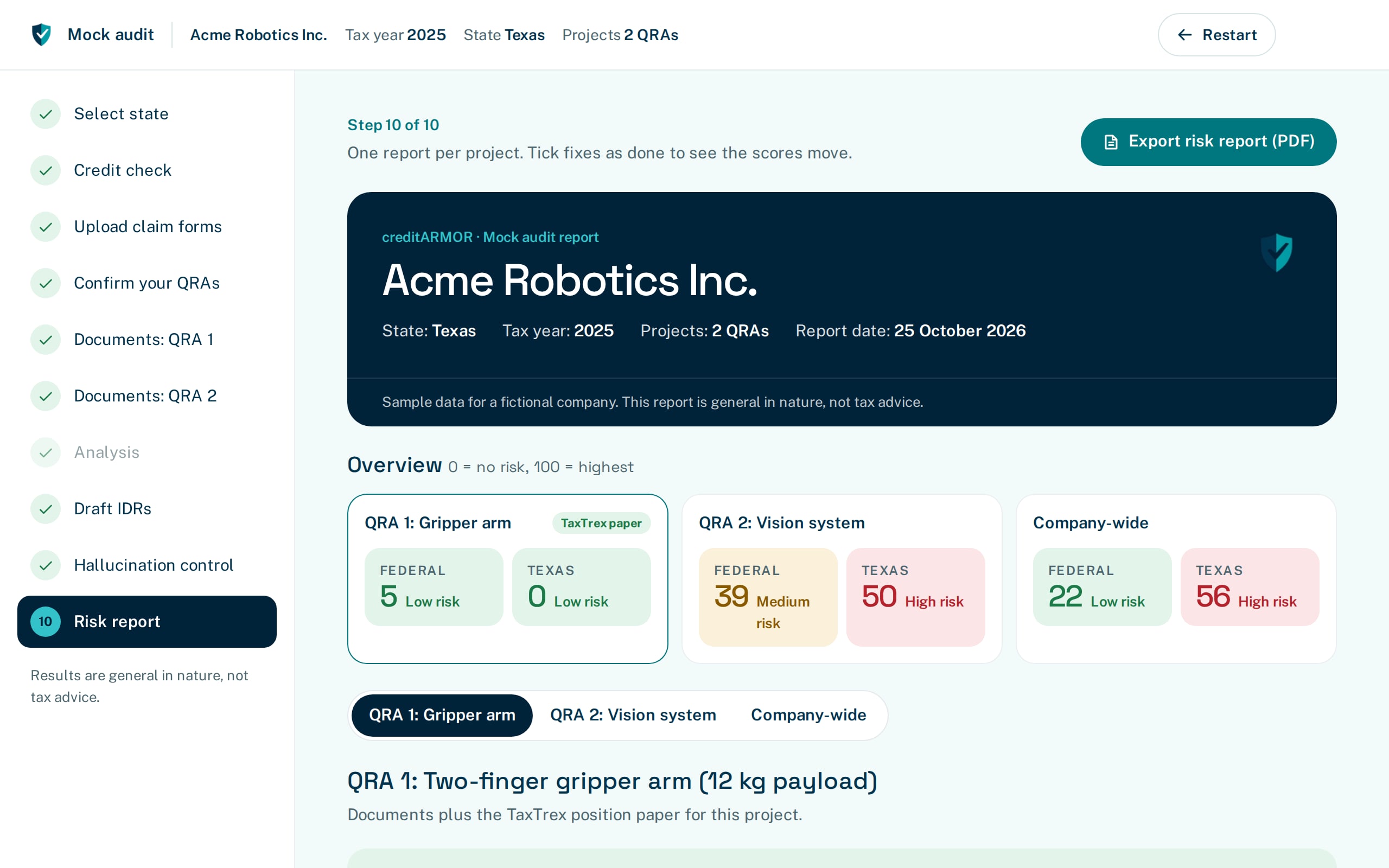
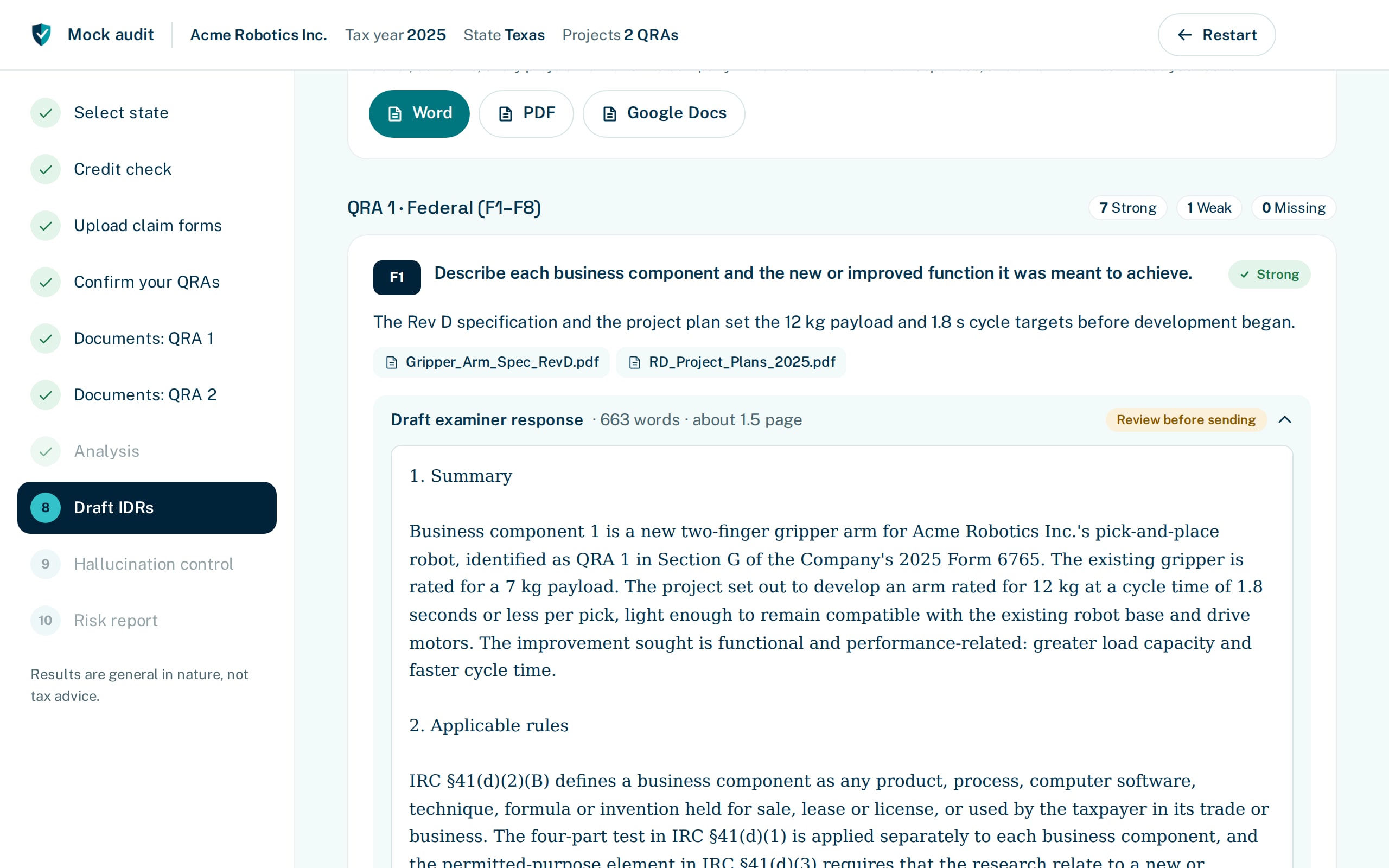
A short walkthrough of the platform, from the first review to the mock audit.
Training
Step-by-step guides to each part of a creditARMOR mock audit.
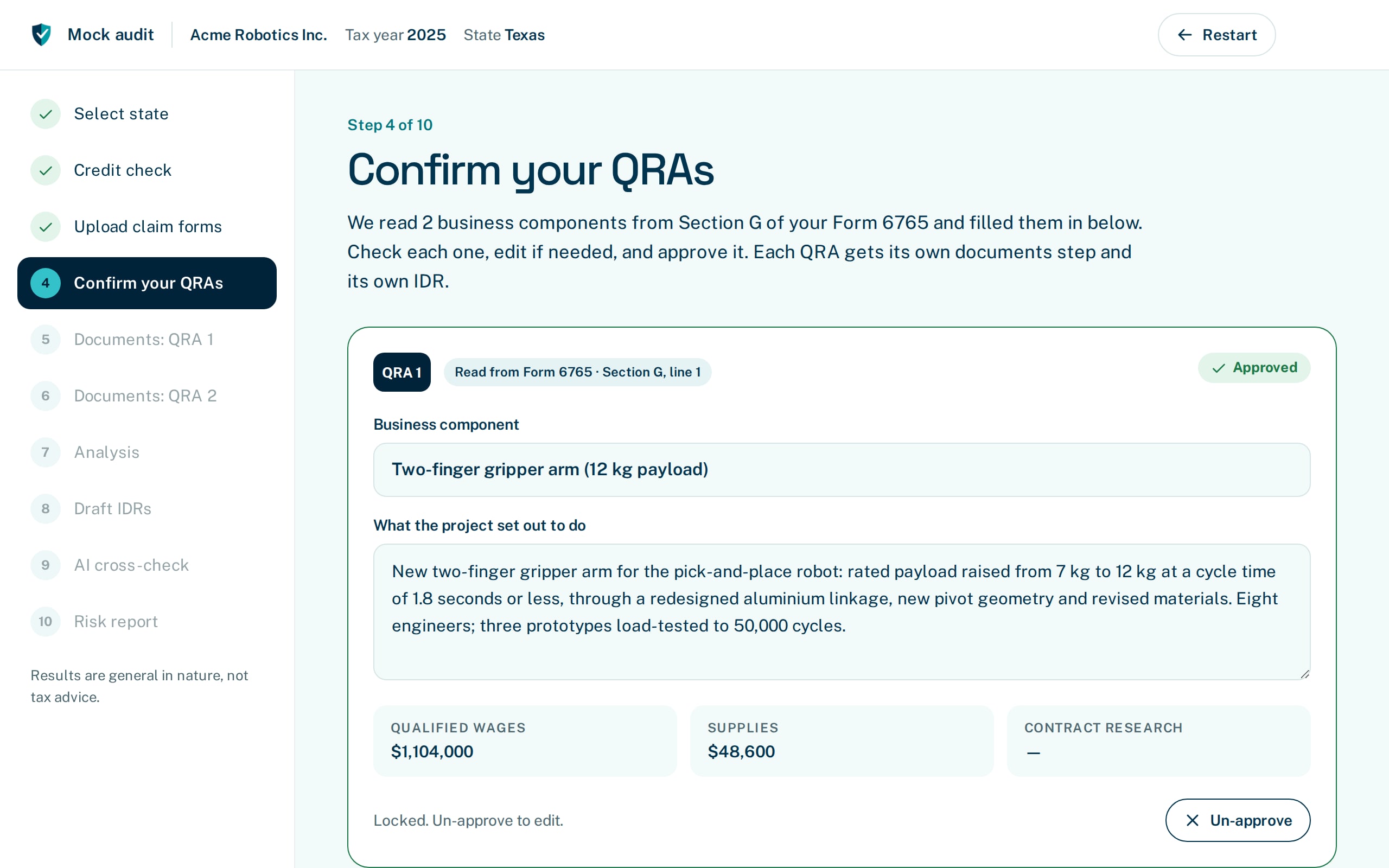
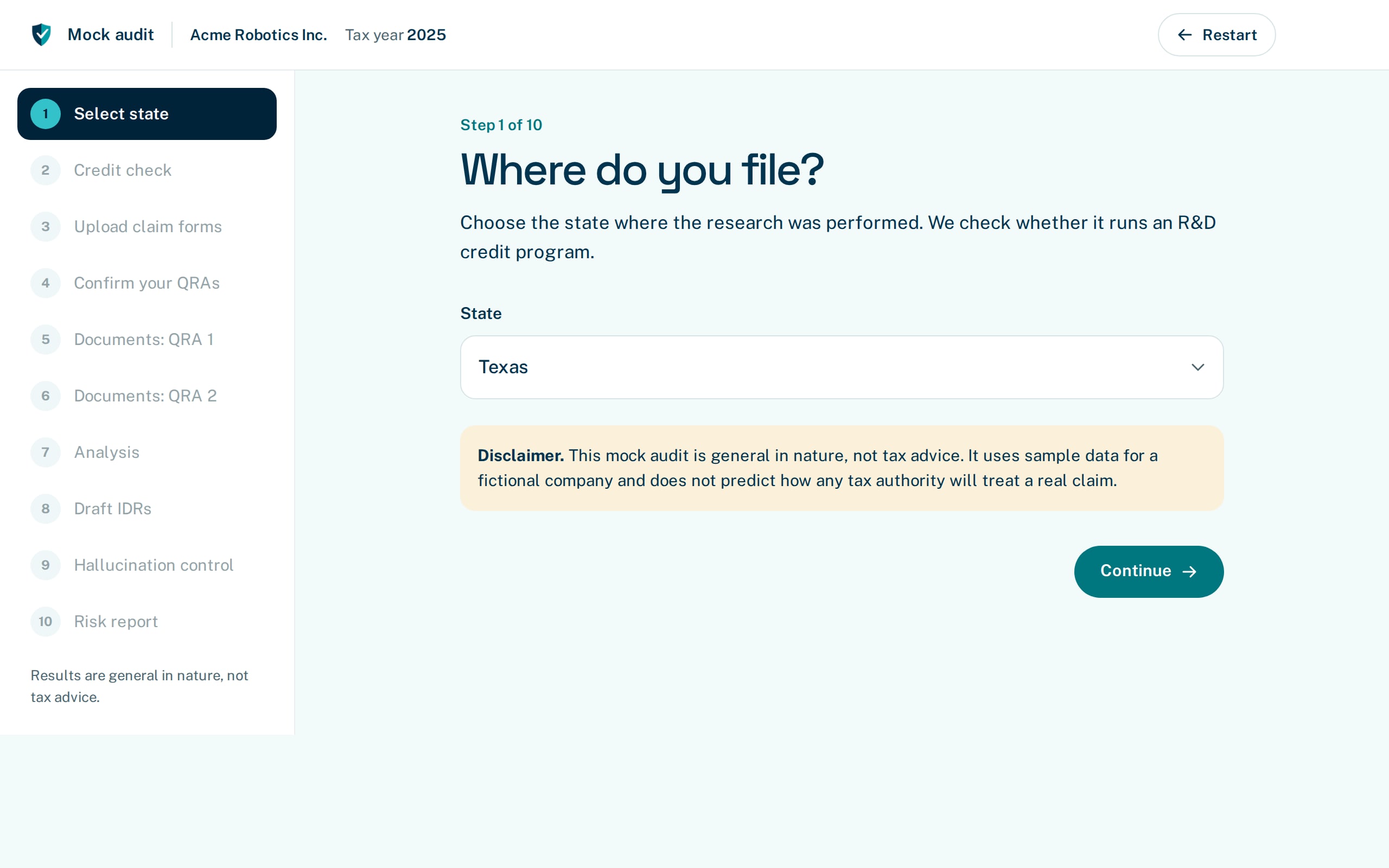
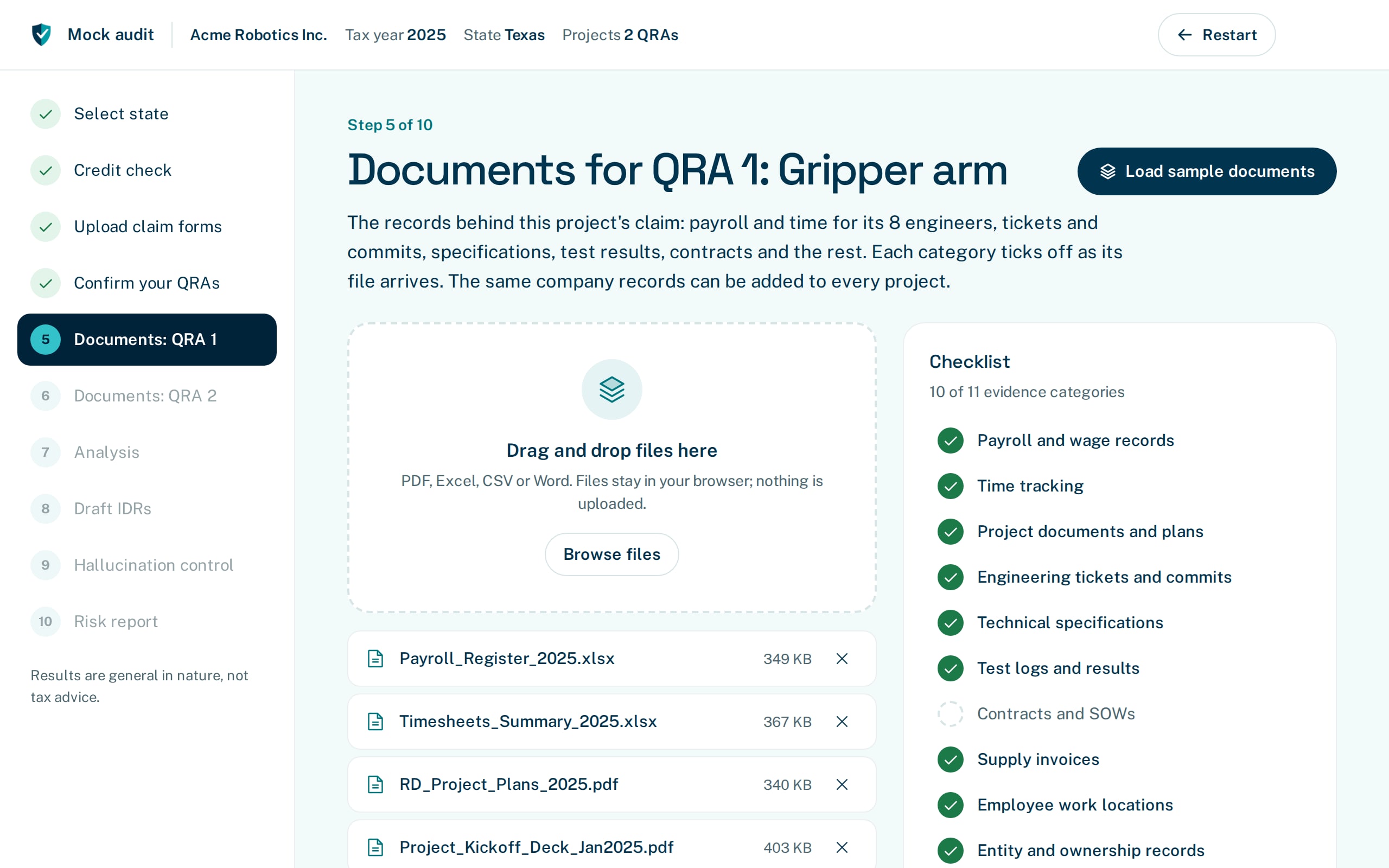
- Before you start a mock auditIdentify the claim, assemble the forms and the evidence per project, and check coverage.
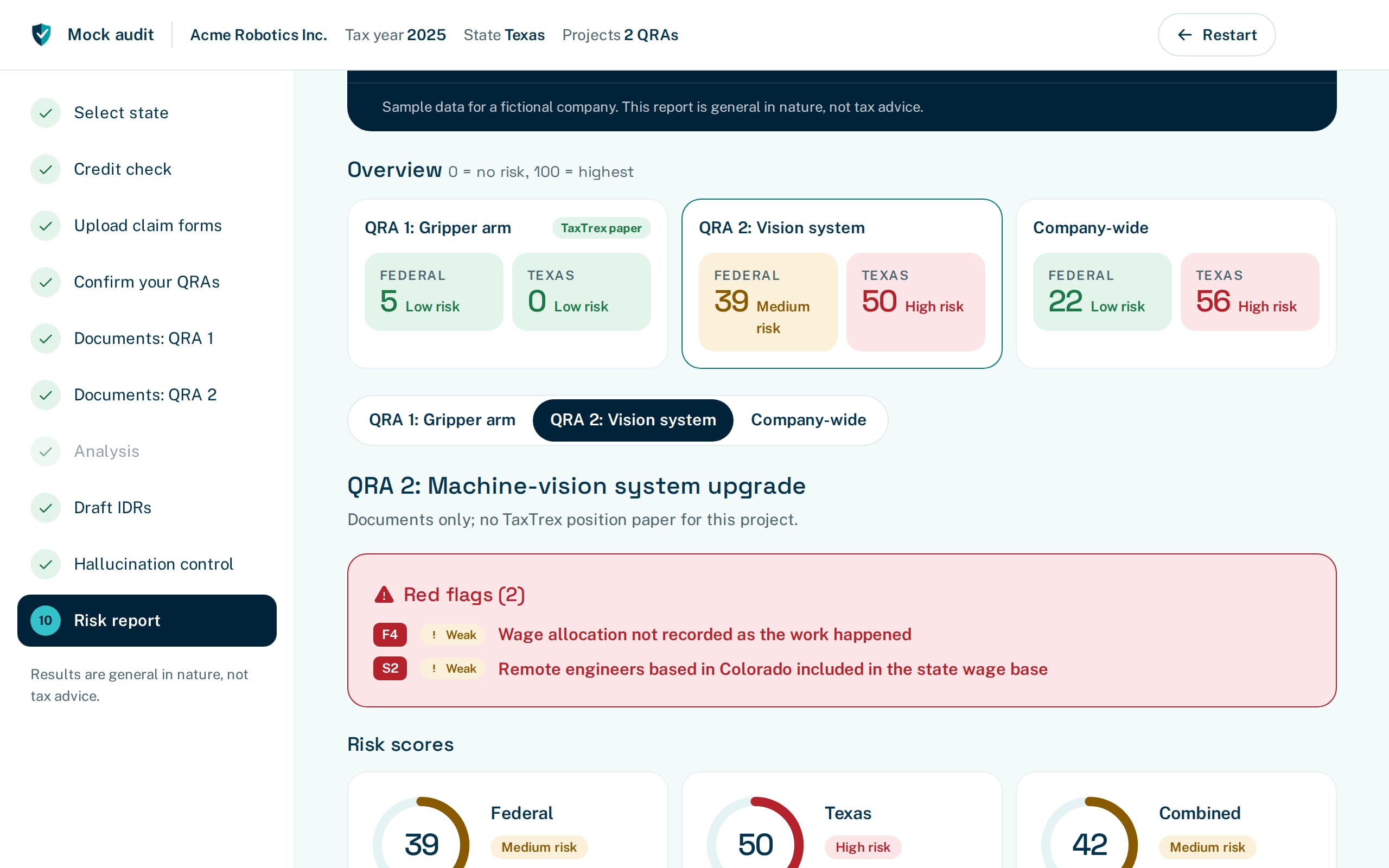
- Form 6765 readinessThe support behind each part of the form, by stage: planned, filed, amended or under examination.
- Project evidence and narrative guideDescribing a business component in four-part-test terms, and why a narrative is not the record.
- Mapping evidence to audit questionsA worked example and a checklist for linking each question to the record that answers it.
- Improving a weak evidence fileRead the reasons, prioritize the critical gaps, find the records that exist, re-run and compare.
- Reviewing a draft audit responseWhat to verify in a drafted response before any part of it is used.
- Using a mock audit during an IRS examinationHow a simulated assessment helps organize records when an examination is open, and what stays separate.
- Mock audit versus an IRS examinationSimulated questions and product scoring against official IDRs and examiner judgment.
Run a free R&D tax credit mock audit.
You can also book a free thirty-minute scoping call with a specialist. Upload your files and see how your evidence would hold up to the questions an IRS examiner is likely to ask. A higher score means a more audit-ready claim.
creditARMOR is a free service. Passing this mock audit does not guarantee that your claim will pass an IRS examination. Book a call or email hello@creditarmor.ai for a login.